
Fall is the most important season of the year for a North Idaho lawn. The heat of summer is over, nights are cool, and the grass is putting its energy into roots instead of top growth. What you do between September and the first snow decides how your lawn looks next spring. Here’s a simple checklist to work through before winter.
1. Aerate Compacted Soil
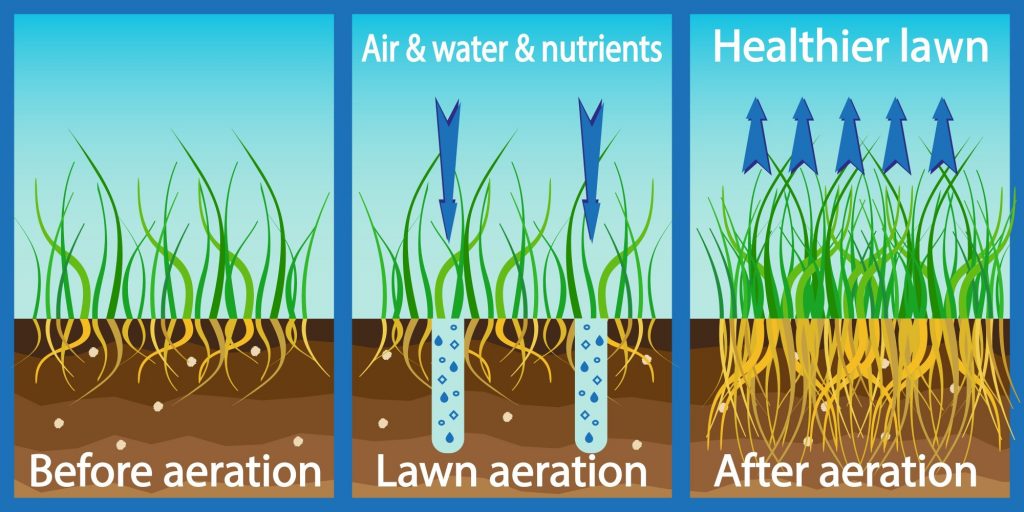
Early fall is one of the best times to aerate cool-season lawns like Kentucky bluegrass, fescue and ryegrass. Pulling soil plugs relieves the compaction that builds up over a summer of mowing, kids and pets, and it lets water and fertilizer reach the roots. The grass has several weeks of good growing weather to recover before it goes dormant. If you’ve never aerated, or your lawn feels hard and water runs off instead of soaking in, put this at the top of the list. Learn more about core aeration.
2. Overseed Thin Areas
Right after aeration is the perfect time to overseed. Seed falls into the aeration holes, gets good contact with the soil and germinates in the warm soil and cool air of early fall. Focus on thin spots along walkways, under trees and anywhere summer heat or traffic wore the grass down. Keep newly seeded areas lightly moist until the seedlings are established.
3. Keep Mowing, but Adjust the Height
Grass keeps growing into October, so keep mowing on a regular schedule. For the last couple of mows, lower the blade slightly, to around two to two and a half inches. Shorter grass going into winter is less likely to mat down under the snow, which helps reduce snow mold in spring. Don’t scalp it, though. Cutting too short stresses the grass right before winter.
4. Rake or Mulch Leaves
A thick layer of leaves left on the lawn blocks sunlight and traps moisture, which can smother grass and invite disease. Rake or blow leaves off regularly, or mulch them into small pieces with your mower if the layer is light. Pine needles from ponderosa pines and firs should be cleared too, since heavy needle cover thins the turf underneath.
5. Apply a Late-Fall Winterizer
A late-fall fertilizer application is one of the most valuable feedings of the year. Applied after top growth slows but before the ground freezes, it helps grass build roots and store nutrients over winter. The result is a faster, greener start next spring. Our lawn fertilization programs include a fall winterizer timed for North Idaho’s season.
6. Treat Fall Weeds
Fall is a great time to control perennial broadleaf weeds like dandelions and clover. As the weather cools, these weeds pull nutrients down into their roots to survive the winter, and they pull weed control products down with them. A fall treatment means fewer weeds next spring.
7. Winterize Your Sprinkler System
Water left in sprinkler lines can freeze and crack pipes, valves and heads once temperatures drop below freezing, which can happen in North Idaho as early as October. Shut off the water supply to the system and make sure the lines are drained before the first hard freeze. If you notice problems like broken heads or dry patches before you shut it down, now is a good time to schedule sprinkler repairs so they’re fixed before spring.
8. Plan Ahead for Snow Mold
Snow mold shows up in spring as gray or pinkish matted patches where snow sat the longest. You can reduce it by mowing a little shorter at the end of the season, keeping leaves off the lawn and avoiding heavy nitrogen feedings too late in the fall. Try not to pile shoveled or plowed snow in the same spot on the lawn all winter.
9. Line Up Snow Removal
Once the lawn is put to bed, the next job is winter. Snow removal routes fill up quickly in the fall. If you want your driveway or parking lot plowed this winter, it’s a good idea to set that up now. See our snow and ice management services.
Want Help With Your Fall Lawn Care?
GreenMax Services handles fall aeration, overseeding, fertilization and weed control for lawns across Hayden, Coeur d’Alene, Post Falls, Rathdrum and Spokane Valley. Call (208) 818-4822 or request a free estimate.